Every business needs customers. That’s obvious. What’s less obvious is how to systematically attract them without burning through your budget or chasing tactics that don’t fit your market.
A customer acquisition strategy is the complete framework for how you’ll find, attract, and convert prospects into paying customers—profitably and repeatably.
Why Customer Acquisition Strategy Matters Now More Than Ever
The cost of acquiring customers has increased dramatically.
Customer acquisition costs (CAC) increased by approximately 60% between 2014 and 2019, and this trend has continued since. And in fact, one 2025 CAC roundup reports that customer acquisition costs have increased 222% over the eight years, illustrating how dramatically more expensive acquisition has become today.
Meanwhile, attention is fragmented. Your prospects see thousands of sales and marketing messages daily. Generic approaches get ignored.
The companies winning today aren’t just spending more. They’re spending smarter. They understand their customers deeply, choose channels strategically, and optimize relentlessly.
A strong B2B acquisition strategy does three things:
1. Reduces waste by focusing resources on what actually works
2. Creates predictability so you can forecast growth and plan hiring
3. Builds competitive advantage through proprietary insights about your market
Building the Customer Acquisition Strategy: Step by Step
Effective customer acquisition starts with structure. The steps below break the process into clear, actionable stages you can follow and refine over time.
Step 1: Define Your Ideal Customer Profile
Before you can acquire customers, you need to know exactly who you’re acquiring.
An Ideal Customer Profile (ICP) describes the characteristics of companies that get the most value from your product. These customers convert faster, pay more, churn less, and refer others.
What to include in your ICP
For B2B companies, define:
– Company size (employees, revenue)
– Industry and vertical
– Technology stack (what tools they already use)
– Organizational structure (who makes buying decisions)
– Pain points (specific problems they need solved)
– Buying triggers (what events prompt them to look for solutions)
How to research your ICP
Start with your existing customers. Analyze your best ones—the accounts with the highest lifetime value, lowest churn, and fastest sales cycles.
Look for patterns:
– What do they have in common?
– How did they find you?
– What convinced them to buy?
Interview 10–15 customers. Ask open-ended questions about their challenges, how they researched solutions, and why they chose you. The patterns will emerge.
If you’re pre-revenue, study competitors’ customers. Read their case studies, check their testimonials, and research who follows them on LinkedIn.
Step 2: Map the Customer Journey
Customers don’t go from unaware to purchase in one step. They move through stages, and your acquisition strategy needs content and touchpoints for each one.
The five stages of awareness
Awareness framework remains useful:
| Stage | Customer Mindset | Your Job |
| Unaware | Doesn’t know they have a problem | Educate about the problem |
| Problem-aware | Knows the problem, not the solutions | Validate their pain, introduce solution categories |
| Solution-aware | Knows solutions exist, not yours specifically | Differentiate your approach |
| Product-aware | Knows your product, hasn’t decided | Overcome objections, build trust |
| Most aware | Ready to buy | Make the purchase easy |
Most companies focus only on the bottom of the funnel—people ready to buy. But according to Gartner, B2B buyers spend only 17% of the buying journey meeting with potential suppliers. The rest is spent researching independently.
If you’re not present during that research phase, you’ve already lost.
Map your touchpoints
Document every interaction a prospect might have with your brand:
– Content they find (blog posts, videos, podcasts)
– Ads they see (paid search, social, display)
– People they talk to (sales, customer success, referrals)
– Reviews they read (G2, Capterra, industry publications)
– Events they attend (webinars, conferences)
Identify gaps.
If prospects research heavily on YouTube and you have no video content, that’s a gap.
Step 3: Calculate Your Acquisition Economics
A customer acquisition strategy that ignores economics is just wishful thinking. You need to know your numbers.
Key metrics to track
- Customer Acquisition Cost (CAC): Total sales and marketing spend divided by new customers acquired in that period.
- Lifetime Value (LTV): The total revenue you expect from a customer over their entire relationship with you.
- LTV:CAC Ratio: How much value you get for each dollar spent acquiring customers.
- Payback Period: How long until a customer’s revenue covers their acquisition cost. Industry CAC payback benchmarks note that under ~12 months is generally considered excellent, 12–18 months is acceptable for many B2B/SaaS businesses, and longer periods may signal inefficiency, depending on business model and sales cycles.
Set your targets
Based on your economics, determine:
– Maximum CAC you can afford per channel
– Minimum volume needed to hit revenue goals
– Required conversion rates at each funnel stage
These constraints will guide your channel selection.
Step 4: Select Your Acquisition Channels
Not all channels work for all businesses. Your ICP, budget, and product determine which ones deserve investment.
The main channel categories
– Outbound Sales: Cold email, cold calling, LinkedIn outreach. Works well for high-ACV B2B products. Effective when targeting is precise.
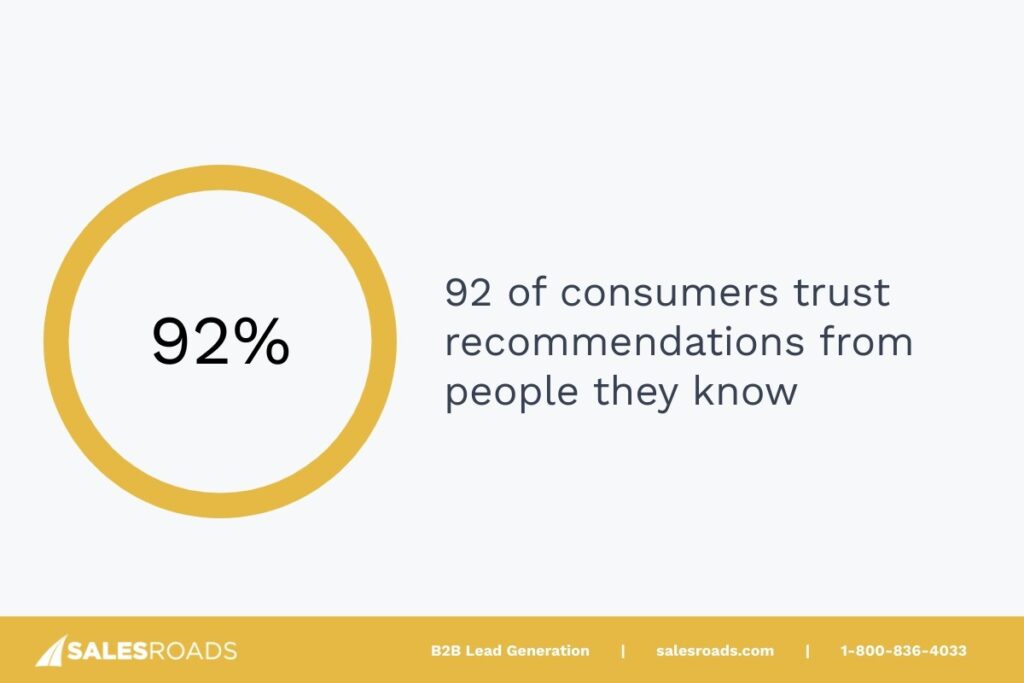
– Referrals: The most trusted channel. Nielsen research indicates that 92% of consumers trust recommendations from people they know over any other form of advertising.
– Partnerships: Co-selling, integrations, affiliate programs. Borrows trust and audience from established players.
– Paid Acquisition: Google Ads, LinkedIn Ads, Facebook Ads, display advertising, sponsorships. Works for products with high enough margins to absorb ad costs.
– Content Marketing: Blog posts, videos, podcasts, downloadable resources. Takes time but compounds.
– SEO: Organic search optimization. According to BrightEdge, 53.3% of all website traffic comes from organic search.
How to choose channels
Match channels to your situation:
| If you have… | Prioritize… |
| High ACV ($10K+/year) | Outbound sales, account-based marketing |
| Low ACV, high volume | Paid acquisition, SEO, product-led growth |
| Limited budget | Content, SEO, partnerships |
| Urgent timeline | Paid acquisition, outbound |
| Long timeline | Content, SEO, community |
Start with two or three channels maximum. Going broad too early means going shallow everywhere.
Step 5: Build Your Channel Playbooks
Once you’ve selected your primary acquisition channel, the next step is turning it into a repeatable system. A channel playbook documents how the channel actually works in practice—who it’s for, how it’s executed, and how success is measured.
Take cold calling as an example.
A cold calling playbook starts by clearly defining the target account and buyer profile. This includes firmographic criteria, job titles, buying signals, and disqualifiers. Without this clarity, activity increases, but results don’t.
Next, the playbook outlines the call strategy: when calls happen, how many attempts are made, and how cadences are structured across calls, voicemails, and follow-ups. This ensures consistency across reps and removes guesswork from daily execution.
The playbook then defines messaging frameworks, not rigid scripts. This includes opening lines, value hypotheses, qualifying questions, and objection-handling principles—so reps can adapt while staying on message.
Operational details matter just as much. A strong cold calling playbook specifies tools and workflows (dialers, CRM fields, call logging rules) and sets clear expectations for documentation and handoff to the next stage of the funnel.
Finally, the playbook establishes success metrics and feedback loops. These typically include connection rates, conversations per day, meetings booked, and conversion to pipeline—reviewed regularly to refine targeting, messaging, and cadence.
While this example focuses on cold calling, the same playbook structure applies to any acquisition channel.
Step 6: Implement Measurement and Attribution
You can’t optimize what you don’t measure.
Set up proper tracking
At a minimum, you need:
– Website analytics (Google Analytics 4, Mixpanel, or similar)
– CRM tools (how leads progress through your pipeline)
– Marketing attribution (which touches contributed to conversions)
For B2B with long sales cycles, this gets complicated. Multi-touch attribution models help, but they’re never perfect.
First-touch vs. last-touch vs. multi-touch
- First-touch attribution credits the channel that first introduced the prospect.
- Last-touch attribution credits the channel that closed the deal.
- Multi-touch attribution distributes credit across all touchpoints.
No model is perfect. The key is picking one, being consistent, and layering in qualitative data.
Ask customers directly
Attribution software can’t capture everything. Add a “How did you hear about us?” field to your signup flow. Follow up on sales calls.
According to Refine Labs CEO Chris Walker, self-reported attribution often reveals channels that software misses entirely—especially word of mouth, podcasts, and dark social (private shares in Slack, email, and DMs).
Step 7: Optimize and Scale
Acquisition strategy isn’t set-and-forget. It’s a continuous loop of testing, measuring, and improving.
Weekly: review leading indicators
– Traffic and impressions by channel
– Lead volume and quality
– Conversion rates between stages
– Spend and efficiency metrics
Monthly: analyze trends
– Which channels are improving or declining?
– What content is driving results?
– Where are leads dropping off in the funnel?
Quarterly: strategic review
– Are we hitting targets?
– Should we double down on winners or fix underperformers?
– Are there new channels worth testing?
– Has our ICP shifted?
Common Customer Acquisition Mistakes to Avoid
- Spreading too thin. Three channels done well beats ten channels done poorly.
- Ignoring CAC payback. High CAC can work if payback is fast. Low CAC doesn’t matter if customers churn before you profit.
- Copying competitors blindly. What works for them may not work for you. Different ICPs, price points, and positioning require different strategies.
- Optimizing for vanity metrics. Traffic, followers, and impressions don’t pay bills. Revenue does.
- Neglecting retention. Acquisition and retention are connected.
Bottom Line
A customer acquisition strategy is a system. It connects your ICP understanding, journey mapping, economic constraints, channel selection, and measurement into a coherent whole.
Start with what you know. Test what you don’t. Let data guide your decisions.
That’s how you build a B2B acquisition strategy that scales.