The sales leaders who are winning right now aren’t the ones with the best product or the smartest reps. They’re the ones who stopped making quota decisions in a boardroom and started making them with data.
They track what’s actually working, they spot problems weeks before they tank a quarter, and they can confidently forecast revenue instead of hoping it materializes.
This article breaks down exactly how to do that. You’ll learn which metrics actually predict quota attainment, how to set quotas that don’t kill motivation or crush your forecast, and the specific mistakes that turn good data into bad decisions.
Why Data-Driven Sales Leadership Is Non-Negotiable Today
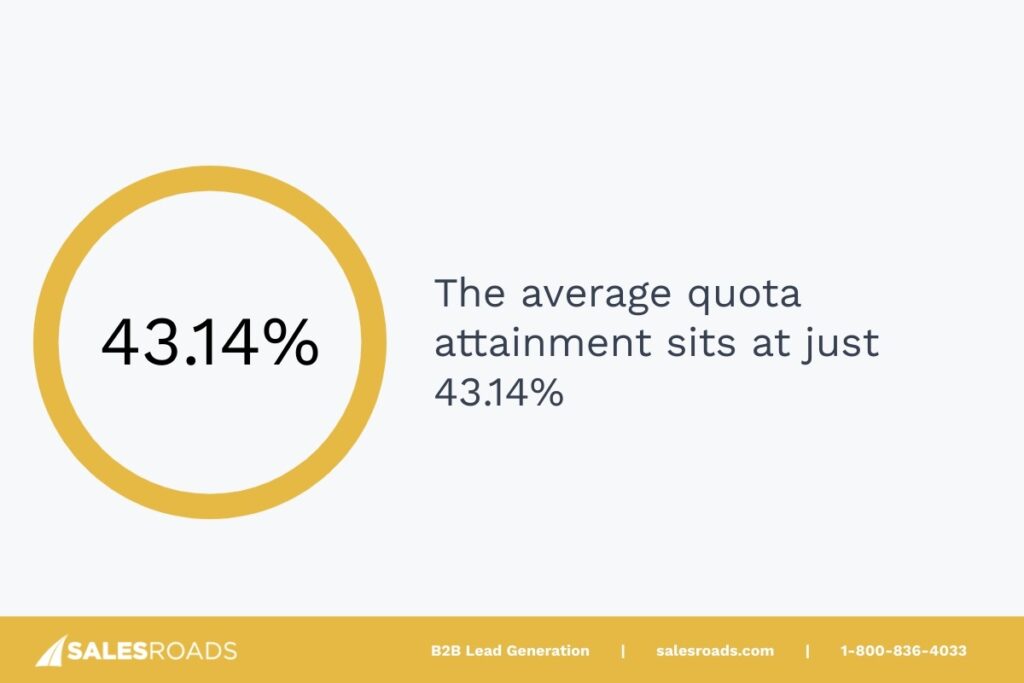
The average quota attainment sits at just 43.14%. That means more than half your pipeline isn’t converting the way it should.
Meanwhile, only 24.3% of salespeople exceed their yearly quota.
If you’re still running your sales org on gut feelings and spreadsheets, you’re already behind.
The best-performing teams aren’t guessing their way to revenue. They’re tracking it, analyzing it, and optimizing based on real data.
Sales analytics gives you visibility into what’s actually working, where deals stall, and which reps need coaching before they miss their number.
Data-driven leadership means you can spot problems before they tank your quarter. It means forecasting with confidence instead of crossing your fingers. And it means making decisions based on patterns across hundreds of deals, not the outcome of your last sales call.
The Problem with Gut-Based Quota Setting
Setting quotas based on “what feels right” or last year’s numbers plus 20% is a recipe for failure.
Here’s what happens: you either set targets so low that your top performers coast, or you set them so high that your entire team burns out chasing impossible numbers.
In 2024, sales quotas rose by 37% compared to 2023, yet attainment rates dropped. When quotas don’t align with market reality or rep capacity, motivation tanks.
In fact, 91% of companies fail to achieve 80% or more of their quota target, with 35% of leaders attributing that failure to misaligned sales activities.
The gut-based approach also creates inconsistency. One manager sets aggressive targets, another goes easy—and suddenly your comp plan is a mess and your forecast is fiction.
Without data backing your quota decisions, you’re essentially asking reps to hit a moving target in the dark.
How Predictive Sales Data Strengthens Sales Strategy
Predictive analytics changes the game by showing you what’s likely to happen, not just what already did.
Instead of reacting to missed targets after the quarter ends, you can see deal risks three weeks out and actually do something about them.
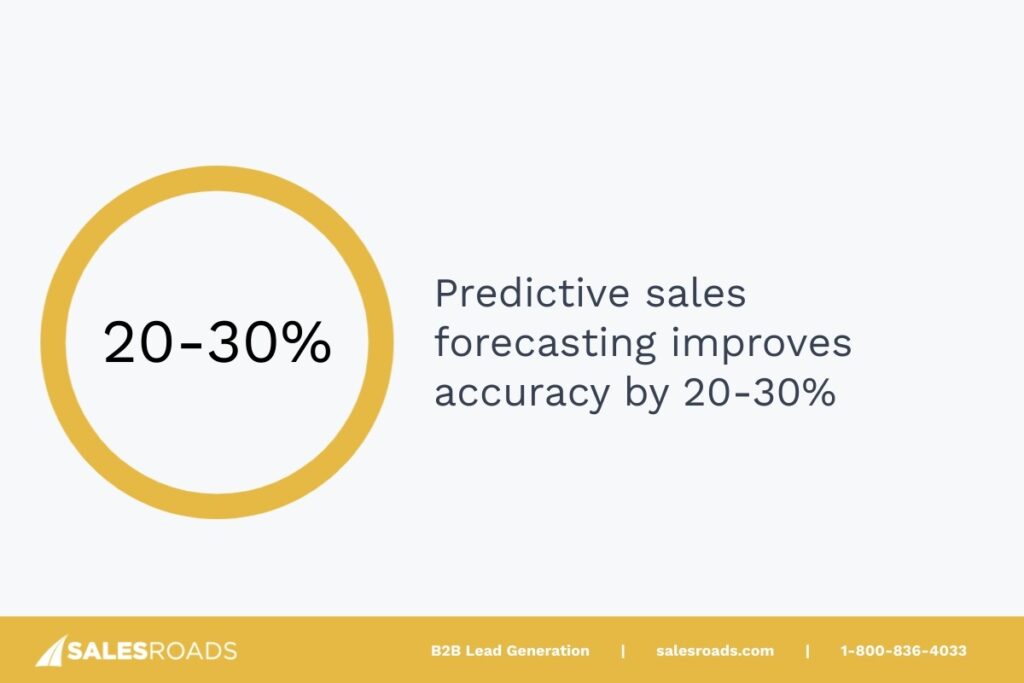
Predictive sales forecasting typically improves accuracy by 20-30% compared to traditional methods. That’s the difference between scrambling for deals in the final week versus confidently managing your pipeline all quarter long.
Here’s what predictive data tells you: which deals will actually close (not which ones your reps think will close), which lead sources convert at the highest rates, how long your sales cycle really is by deal size, and where prospects typically drop off.
AI-powered solutions can predict pipeline outcomes with up to 90 percent accuracy when analyzing patterns across hundreds of data points.
Core Metrics That Drive Quota Performance
You can’t manage what you don’t measure. But measuring everything is just noise.
The metrics that actually matter are the ones that connect daily activities to closed revenue and show you where your process breaks down.
Sales Activities vs. Revenue Outcomes: What to Track
There’s a huge difference between activity metrics and outcome metrics, and you need both.
Activity metrics (calls, emails, meetings) tell you if your team is putting in the work. Outcome metrics (revenue, closed deals, quota attainment) tell you if that work is actually paying off.
Track activity metrics like call volume, email sends, meetings booked, and demos delivered. These show effort and help you identify reps who aren’t doing the work. But don’t stop there.
The real question is: how much activity does it take to generate results?
Your conversion ratios connect activities to outcomes: calls-to-meetings ratio, meetings-to-opportunities ratio, and opportunities-to-closed deals.
Conversion rate is the percentage of leads that turn into customers, and sales teams rank this as the third most important sales metric they track.
The winning teams track both in real time and look for correlations. What activity level consistently produces quota attainment? That becomes your baseline for coaching and hiring.
Metrics That Matter Most: Win Rates, Cycle Length, CAC, and More
Let’s get specific. These four metrics directly impact whether you hit your number:
- Win Rate: This is the percentage of opportunities you close. If your win rate is below 20%, you either have a qualification problem (too many bad-fit deals in your pipe) or a closing problem. Track this by rep, by deal size, and by lead source to find patterns.
- Sales Cycle Length: How long does it take from first contact to closed deal? Longer cycles tie up resources and make forecasting harder. If your cycle is stretching, look at where deals stall. Every week you shorten your sales cycle increases revenue velocity.
- Customer Acquisition Cost (CAC): This is your total sales and marketing spend divided by new customers acquired. CAC benchmarks have massive ranges, but the median CAC payback period is 19 months. Track CAC by channel to see where you’re overspending.
- Quota Attainment: The percentage of your quota that each rep hits. This is your ultimate outcome metric. Low attainment across the board means quotas are unrealistic or your reps need serious help. High attainment by a few reps and low by others points to coaching opportunities or territory imbalances.
- Other critical metrics: average deal size (is it growing or shrinking?), pipeline coverage (do you have 3-4x your target in qualified pipeline?), and churn rate (are you losing customers faster than you’re adding them?).
Using Sales Dashboards to Monitor Quota Attainment
Spreadsheets are where good data goes to die.
Sales dashboards put your most important metrics in front of the people who need them, updated in real time, so you can actually act on what you’re seeing.
Good dashboards show your current performance against quota with clear visual indicators—green for on-track, yellow for at-risk, red for urgent attention needed.
Track quota attainment by rep, by team, and by time period. Rep performance is most accurately measured by three key metrics: conversion rate, total revenue generated, and quota attainment percentage.
Display trends over time so you can see momentum. Is your attainment rate improving or declining month-over-month? Are certain reps consistently hitting 110% while others hover at 60%? Trend lines make these patterns obvious.
Include benchmarks and goals on every chart. Don’t just show “45 deals closed”—show “45 of 70 deals (64% to target).” Context turns numbers into information.
Break down performance by segment, by product, by region. Where are you winning? Where are you losing? Dashboards that slice data multiple ways help you find the story in the numbers.
Quota Planning That Aligns With Market and Rep Potential
Your quota should do two things: challenge your team to grow and reflect on what’s actually possible in their market.
Too many sales leaders set quotas in a vacuum—they pick a number based on revenue targets and push it down the org. That creates misalignment between rep potential and realistic expectations.
Anchor your quotas to three things—market opportunity, individual rep capability, and historical performance trends. This prevents quotas from becoming demotivating guesses.
Companies that align quotas to individual rep potential see higher quota attainment rates compared to those using one-size-fits-all approaches. That’s not a small difference. It’s the gap between high-performing teams and underperforming ones.
How to Use Historical Sales Data to Set Smart Quotas
Start with what actually happened. Pull 12-24 months of sales data and look for patterns:
- Close rates by rep and pipeline stage — Does your team consistently close 30% of opportunities in stage 3? Build that into expectations.
- Average deal size trends — Is deal size growing, shrinking, or flat? Adjust for market reality.
- Sales cycle length — If your average cycle is 90 days, your quota logic changes in a 30-day month versus a 90-day quarter.
- Seasonal patterns — B2B sales often spike in Q4. B2C might see summer slumps. Plan accordingly.
The math is straightforward: (Historical Close Rate×Avg Deal Size×Pipeline Capacity) = Realistic Quota
But here’s what gets missed: historical data only works if you’re accounting for changes. If you hired three new enterprise reps this year, last year’s individual performance data won’t apply to them.
Factoring Territory Size, Deal Size, and Lead Velocity
Not all quotas should be equal. Your enterprise account executive shouldn’t have the same quota as your SMB hunter.
Your rep in a mature territory shouldn’t match your rep in a startup market.
Break it down:
| Factor | Impact on Quota |
| Territory Size | Smaller territories = lower quota ceiling |
| Average Deal Value | Larger deals = fewer needed to hit quota |
| Lead Velocity | High inbound = higher potential quota |
| Market Maturity | Established markets = predictable, higher quotas |
The mistake: treating these as constants. Territory dynamics shift. Review and adjust quarterly based on changes in lead flow, market conditions, and rep tenure in their accounts.
Mistakes to Avoid When Using Sales Data for Quota Management
Data-driven quotas are smart. But data can lie if you’re not asking the right questions.
Misreading Lagging Indicators as Predictive Insights
This is the biggest trap. Sales leaders confuse outcome with cause.
Lagging indicator example: Your top rep closed, so you assume they can do it again, and set their quota to 1.8M based on “their proven capacity.”
What you missed: Why did they hit $1.5M? Was it because of:
- A single large deal that won’t repeat?
- Unusual territory dynamics (client expansion that won’t happen again)?
- The entire market having an exceptionally good quarter?
If it were a one-time deal, your quota is unrealistic. If the market contracted this quarter, your data is outdated.
The fix: Use lagging data to validate historical trends, but build quotas on leading indicators. Ifthe pipeline is down but last quarter’s revenue was strong, that’s a warning sign—not a green light to raise quotas.
Over-Relying on Tools Without Clear Human Oversight
Your forecasting tool, BI dashboard, or predictive analytics platform will give you numbers. Don’t let that number become your quota without a gut check.
Here’s why: Tools are only as good as the data fed into them. If your sales team is logging opportunities inconsistently, if deal probabilities are inflated, or if your database has duplicate accounts, your tool’s recommendations are garbage.
Common blind spots:
- Deal probability is guessed, not tracked — If a rep puts every opportunity at 50%+ probability, your predictive model fails.
- Forecast accuracy drops when reps game the system — When quota becomes based purely on tool output, reps start manipulating pipeline data to look good.
- Market changes aren’t coded into algorithms — Your tool doesn’t know your biggest client is cutting budgets this quarter or that a competitor just launched.
The fix: Use tools as inputs, not outputs. A tool can flag that a rep’s quota should be $1.2M based on the pipeline. Your job as a leader is to ask:
- Do I believe the pipeline data is accurate?
- Are there market headwinds or tailwinds this person will face?
- Does this match their experience level and track record?
Then you decide the quota. The tool is a compass; you’re still navigating.
Bottom Line
Data only works if you use it before the quarter ends, not after. The reps who miss quota, the deals that slip, the territories that underperform—none of that has to surprise you.
With the right metrics tracked in real time and quotas anchored to actual market conditions and rep capacity, you see problems coming and you fix them.
Start with one thing:
Pull your last 18 months of CRM data and map your actual conversion ratios, cycle length, and win rates by rep and by deal size. That’s your baseline. From there, align your quotas to what the data actually says is possible—not what you wish was possible.