Classic frameworks have guided B2B teams through complex deals over the years, but modern challenges like longer buying cycles, multi-stakeholder decisions, and AI-driven insights have sparked new approaches.
And choosing the right methodology is about matching the framework to your business, your team, and the way your buyers make decisions.
Why Sales Methodologies Still Matter in a Buyer-Led Era
Buyers today are more informed than ever. They research vendors, compare solutions, and make decisions before sales even enter the conversation. They want someone who can cut through the noise and help them make the right decision.
Sales methodologies give reps a repeatable framework to do exactly that. They provide structure in chaotic buying processes and help sellers navigate complex deals without winging it.
The Rise of Process-Driven Selling in Complex B2B Environments
B2B sales has gotten messy. An average of 5 decision-makers are involved in the sales process. Sales cycles are longer, buying committees are bigger, and deals that should close keep stalling.
Process-driven selling emerged as a direct response to this complexity. Instead of relying on gut instinct, methodologies give reps a systematic way to manage each stage of the deal. They help you qualify early, identify blockers, and move opportunities forward with intention.
The shift toward structured frameworks also reflects a fundamental change in how companies operate. Sales is no longer about individual heroics. It’s about building scalable, predictable revenue engines. When your team follows a consistent methodology, you can diagnose what’s working, coach more effectively, and actually forecast with confidence.
How Frameworks Influence Sales Performance and Team Alignment
Here’s the problem most sales teams face: everyone sells differently. Some reps build relationships. Others push hard on ROI. A few wing it completely. The result? Inconsistent sales performance, confusion about what “good” looks like, and managers who can’t figure out how to replicate success.
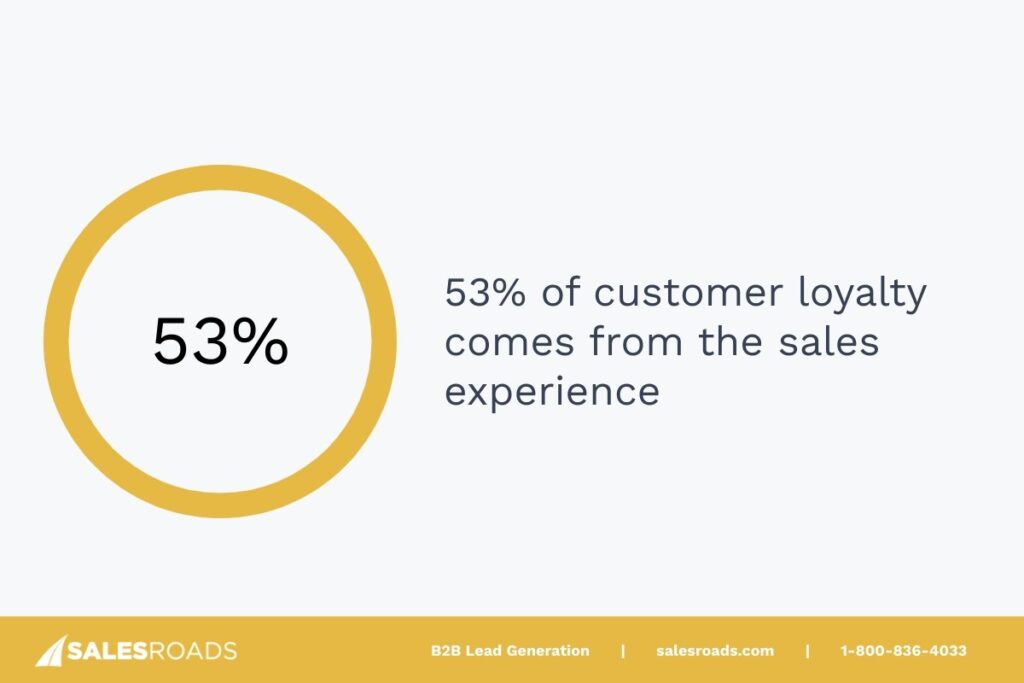
A study found that 53% of customer loyalty is driven by the sales experience itself rather than the brand, price, or service. That means how you sell matters as much as what you sell.
Sales methodologies solve this.
They create a common language and shared playbook that gets everyone on the same page. When your team operates from the same framework, you can benchmark performance, identify skill gaps, and give targeted coaching that actually moves the needle.
Classic Sales Methodologies That Set the Foundation
Before any modern framework existed, a handful of methodologies established the principles that still guide B2B sales today.
These aren’t dusty relics. They’re battle-tested approaches that shaped how we think about qualifying, diagnosing, and closing complex deals.
SPIN Selling: A Question-Based Model for Consultative Selling
Developed by Neil Rackham in 1988 after analyzing 35,000 sales calls, SPIN Selling introduced a radical idea: great salespeople don’t just present solutions—they diagnose problems through strategic questioning.
SPIN is an acronym for four types of questions:
- Situation questions establish context about the buyer’s current state
- Problem questions uncover pain points and challenges
- Implication questions make those problems feel urgent by exploring consequences
- Need-payoff questions help buyers articulate the value of solving the problem
The genius of SPIN is that it shifts control from the seller to the buyer. Instead of pitching, you’re guiding prospects to discover their own needs.
SPIN works best when prospects haven’t fully identified their problems or don’t understand the implications. It’s a consultative approach that builds trust and positions you as an advisor, not just a vendor.
The downside is that it’s time-intensive and requires patience, not ideal when you need quick decisions.
The Challenger Sale: Teach, Tailor, and Take Control
The Challenger Sale, introduced by Matthew Dixon and Brent Adamson in 2011, challenged decades of conventional wisdom about relationship selling.
A study analyzed thousands of sales reps in terms of their demonstrated behaviors and dominant skills and found that 40% of high sales performers fell into one category: The Challenger.
Challengers don’t just respond to customer needs; they teach customers something new about their business, reframe their thinking, and push them out of their comfort zone. The methodology follows three core principles:
- Teach for differentiation: Deliver insights that challenge the customer’s assumptions and connect to your unique value proposition.
- Tailor for resonance: Customize your message based on the customer’s industry, role, and specific situation.
- Take control: Guide the conversation, push back on objections, and drive the deal forward with confidence.
Challenger Sales encourages sales reps to engage in constructive tension during customer interactions, and by challenging the customer’s status quo and pushing them to reevaluate their current strategies, salespeople can demonstrate their expertise and create a sense of urgency for change
Solution Selling: Diagnosing the Problem Before the Pitch
Solution Selling, formalized in the 1980s, introduced the concept of selling outcomes instead of features. The core idea: buyers don’t care about your product—they care about solving their problems.
The framework emphasizes diagnosis over presentation. Sales reps act like doctors, asking questions to understand symptoms, uncovering root causes, and prescribing tailored solutions.
Only after thoroughly diagnosing the problem do you present your offering—and when you do, it’s positioned as the logical answer to their specific situation.
Solution Selling works particularly well in consultative environments where buyers need help understanding what they actually need.
It builds credibility by demonstrating expertise and ensures you’re solving the right problem, not just pushing product.
The challenge is that it requires skilled questioning, active listening, and the patience to resist jumping straight to the pitch.
Sandler Selling: Qualification Before Presentation
David Sandler turned traditional selling on its head in 1967 with a methodology built on one core principle: qualify ruthlessly before you present anything.
The Sandler system follows a seven-step process, but its defining characteristic is the emphasis on mutual qualification. Instead of chasing every lead, Sandler-trained reps position themselves as trusted advisors who only work with prospects who are genuinely ready to buy.
The approach flips the power dynamic. Rather than begging for meetings or convincing skeptical buyers, you’re determining together whether there’s a fit.
Key elements include:
- Upfront contracts that set expectations for each conversation
- Budget discussions early in the process
- Pain-focused discovery that uncovers emotional drivers
- Disqualification as a legitimate outcome
When done well, the Sandler Selling System can even lead to sales where the prospect feels like the deal was their idea in the first place.
Sandler works beautifully for transactional sales and situations where time matters more than volume. But it requires confidence to walk away from bad-fit opportunities, and the direct approach to budget conversations can feel uncomfortable for both reps and buyers.
BANT: The Original Qualification Framework
Developed by IBM in the 1950s, BANT is the lead qualification framework. Seven decades later, it’s still widely used because it’s simple, practical, and gets straight to the point.
BANT asks four straightforward questions:
- Budget: Can they afford this?
- Authority: Are you talking to the decision-maker?
- Need: Do they have a problem you can solve?
- Timeline: When are they looking to buy?
Companies that effectively implemented the BANT framework saw a 59% increase in their conversion rates, and over 52% of salespeople still find it reliable to qualify prospects.
BANT’s strength is its efficiency. You can quickly separate real opportunities from tire-kickers and focus your time where it matters. The framework is easy to learn, easy to teach, and works across virtually any B2B sales environment.
However, BANT can feel too rigid for modern buying processes. Having an average of 5 decision-makers involved in the sales process today makes the “Authority” criterion more complex.
And with subscription pricing models, budget discussions aren’t as straightforward as they once were.
MEDDIC: Enterprise-Grade Qualification for Multi-Stakeholder Deals
MEDDIC was born in the trenches of enterprise software sales in the 1990s. The framework is an acronym: Metrics, Economic Buyer, Decision Criteria, Decision Process, Identify Pain, and Champion.
Unlike BANT’s surface-level questions, MEDDIC digs deep into how enterprise deals actually get done.
- Metrics forces you to quantify impact. Not just “we’ll save you time”, but “we’ll reduce your processing time by 40%, which translates to $500K annually.” Hard numbers matter when you’re selling six-figure deals.
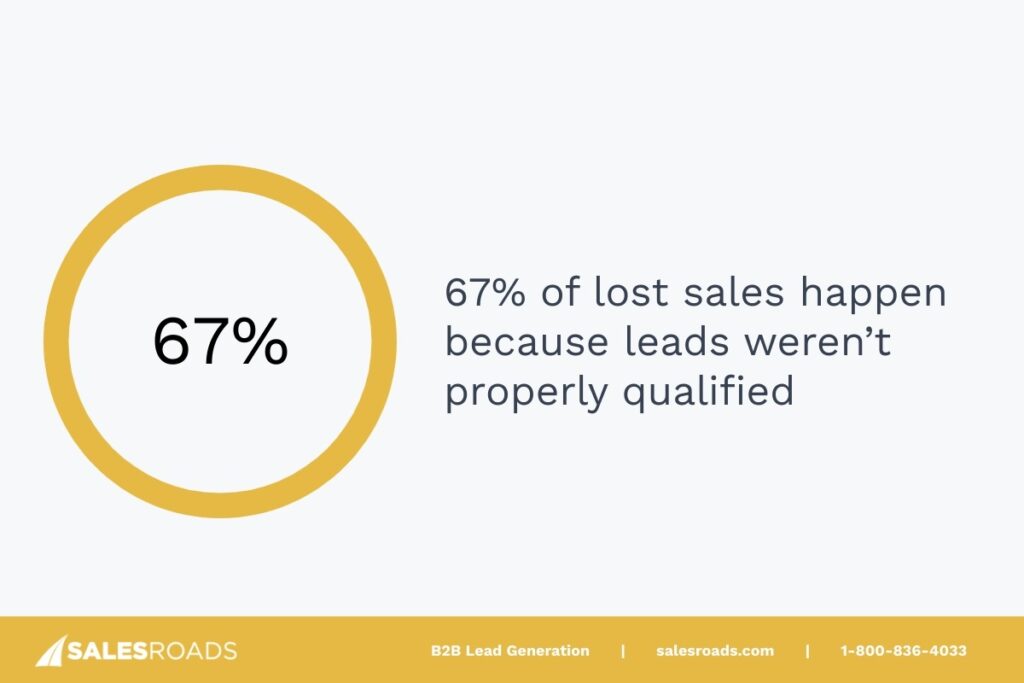
- Economic Buyer ensures you’re talking to the person who controls budget. 67% of lost sales are a result of sales reps not properly qualifying leads before taking them through the sales funnel. In enterprise sales, wasting months pitching someone without spending authority kills your pipeline.
- Decision Criteria reveals what the customer actually cares about when evaluating vendors. Is it security certifications? Implementation speed? Integration capabilities? You need to know their scorecard before you can win.
- Decision Process maps out the internal bureaucracy. Who needs to approve this? What legal reviews are required? When do committees meet? Understanding the process prevents deals from stalling in procurement hell.
- Identify Pain goes beyond surface symptoms to uncover business-critical problems. The best MEDDIC practitioners don’t just find pain; they help prospects understand the full cost of doing nothing.
- Champion means cultivating an internal advocate who sells for you when you’re not in the room. In complex deals with multiple stakeholders, champions navigate internal politics and drive urgency.
MEDDIC excels in enterprise sales involving large corporations with intricate organizational structures, multiple departments, and numerous decision-makers. It’s overkill for transactional sales, but for high-value, multi-month deals with buying committees? It’s the gold standard.
The downside is that MEDDIC is rigorous and time-intensive. Its process involves in-depth research and data collection about the prospect, their organization, and the competitive landscape.
This can be time-consuming and may require significant effort to gather all the necessary information. But when you’re chasing $500K+ deals, the investment pays off.
Modern Frameworks Reshaping B2B Sales Strategy
The classic methodologies laid the groundwork, but modern B2B sales demanded evolution. Buying committees got bigger, sales cycles stretched longer, and buyers became more sophisticated
The frameworks below emerged to address these new realities, each one built for the complexity, speed, and precision today’s sellers need to win.
SNAP Selling: Speed, Relevance, and Simplicity for Today’s Buyers
Jill Konrath introduced SNAP Selling in 2010 with a blunt observation: modern buyers are drowning. 77% of B2B buyers describe their most recent purchase as “difficult” or “very complex”. They’re overwhelmed, distracted, and have zero patience for complexity.
SNAP stands for Simple, Invaluable, Aligned, and Prioritized. It’s not about what you sell; it’s about how you sell it.
- Simple means cutting the clutter. No jargon, no feature dumps, no 40-slide decks. Your message should be so clear that a busy executive can understand your value in 30 seconds. If they have to work to understand you, they won’t.
- Invaluable positions you as a trusted advisor, not another vendor. Nearly one-third of B2B buyers lack trust in salespeople, and 88% of buyers will only make a purchase if they perceive the salesperson as a trusted advisor. You earn that trust by delivering insights, not pitches.
- Aligned means matching your approach to their priorities, not yours. Today’s B2B buyers expect personalized attention tailored to their specific needs from solution providers. Generic messaging gets deleted. Relevant messaging gets responses.
- Prioritized focuses on what matters most to the buyer right now. If you’re pitching email automation but their CEO is breathing down their neck about lead generation, you’d better talk about lead generation first.
SNAP Selling works beautifully in fast-paced environments where buyers are time-starved and information-overloaded. It’s particularly effective for technology sales, SaaS, and any situation where you’re competing for attention with dozens of other vendors.
The challenge is that SNAP requires deep research and business acumen. You can’t simplify what you don’t understand, and you can’t align with priorities you haven’t identified.
Reps need to do their homework before every conversation, and that discipline doesn’t come naturally to everyone.
Gap Selling: Focusing on the Delta Between Today and Tomorrow
Keenan launched Gap Selling in 2018 with a provocative stance: stop selling solutions and start selling problems.
The methodology centers on one idea: the bigger the gap between a prospect’s current state and their desired future state, the more urgent the need to change.
Gap Selling has three components:
- Current state requires forensic-level discovery. What’s their environment? What problems are they experiencing? How are those problems impacting their business financially, operationally, and emotionally? You’re not looking for surface pain—you’re diagnosing root causes.
- Future state reveals where they want to be. What does success look like? What metrics improve? What changes in their day-to-day operations? The more specific and vivid the future state, the more powerful the contrast with where they are today.
- The gap is where the sale happens. Your job isn’t to pitch features—it’s to make the gap crystal clear and quantify the cost of staying in the current state. When prospects truly understand the magnitude of the gap, they sell themselves on change.
Reps need exceptional questioning skills, deep business knowledge, and the patience to invest heavily in discovery. You should spend a quarter of the sales cycle on learning your prospects’ current and future state.
That’s a massive time investment, which is why Gap Selling works best for complex B2B sales with longer cycles and custom solutions.
Jake Dunlap’s 4C Framework: Innovative Selling
While not yet as entrenched as some legacy methodologies, Jake Dunlap’s 4 C Framework offers a modern blueprint for navigating complex B2B sales in an AI-driven world.
The framework emphasizes four pillars that sales organisations must master to stay ahead.
- Commitment to technology and AI proficiency: Dunlap argues that leaders and reps alike must be committed to becoming proficient with AI and sales tools, rather than simply “thinking about AI” or implementing tools at 30 % adoption.
- Current GTM strategy: Dunlap emphasises that many sales teams are still running go-to-market strategies rooted in the past. The second “C” demands a GTM approach that is current—meaning adapted for modern buyers, technology, and channels.
- Customized sales journeys: The third “C” is about recognising that one size no longer fits all. Buyers enter at different levels of readiness (cold, educated, vetted, self-serve) and have varying preferences for engagement. Teams must therefore build journeys that reflect that diversity and adapt in real time.
- Consistent performance optimization: The fourth “C” is about running your sales org like a performance-driven machine: monitoring, iterating, and refining processes weekly/monthly, not waiting for big shifts every few years.
David Krieger welcomed Jake Dunlap on the Sell Like A Leader podcast, where Jake discussed the 4C Framework in depth.
In the episode, he explains why traditional sales methodologies are becoming outdated and why modern sales leaders must become proficient in generative AI to stay competitive. You can listen to the episode here:
Comparing Sales Methodologies: When and Where They Shine
Every framework claims to be the answer, but the best methodology depends on what you’re selling, who you’re selling to, and how your business operates.
Let’s break down when each approach makes sense.
| Sales Methodology | Best For | Ideal Deal Complexity | Key Buyer Stage / Context |
| SPIN Selling | Discovery-driven conversations that uncover needs | Mid to high | Early to mid-stage qualification and needs analysis |
| The Challenger Sale | Situations where buyers are unaware of their problem or thinking incorrectly | High | Early-stage insight selling and complex enterprise deals |
| Solution Selling | Consultative selling focused on matching tailored solutions | Mid to high | Mid to late stage, when buyer needs are clearer |
| Sandler Selling System | Long-cycle, trust-based B2B relationships | Mid to high | Entire sales cycle — focuses on mutual qualification |
| BANT | Fast qualification in transactional or high-volume pipelines | Low to mid | Early stage — quick lead qualification |
| MEDDIC | Enterprise-level sales with multiple stakeholders | High | Mid to late stage — complex, multi-maker deals |
| SNAP Selling | Busy, skeptical buyers in fast-moving industries | Low to mid | Early to mid-stage — when buyers need simplicity and clarity |
| GAP Selling | Buyers needing a clear contrast between current and desired outcomes | Mid to high | Mid-stage — when quantifying business impact is key |
| Jake Dunlap’s 4C Framework | Innovative, tech-forward GTM where AI and data drive differentiation | High | Throughout the sales cycle — especially when scaling GTM, personalizing journeys, and iterating performance |
Identifying the methodology that fits your business is only the first step. Success comes from thoughtful implementation, alignment, and ongoing refinement.
Bottom Line
The right sales methodology can transform your team’s performance, but only if it fits your context.
Instead of chasing the latest trend or copying competitors, focus on a framework that aligns with your market, your buyers, and your growth strategy, and then commit to mastering it, iterating on it, and letting it guide smarter, more consistent selling.