Account-based marketing delivers results. Companies using ABM report 208% higher revenue from their marketing efforts compared to those that don’t. Yet building an in-house ABM engine requires specialized talent, expensive technology stacks, and significant time investment.
That’s why more B2B companies are turning to ABM outsourcing partners.
But here’s the challenge: the market is flooded with agencies claiming ABM expertise. Some deliver exceptional results. Others burn through your budget while generating vanity metrics that don’t translate to pipeline.
This guide helps you separate the genuine experts from the pretenders. You’ll get practical tips for evaluating potential partners and learn the red flags that signal trouble ahead.
Why Companies Outsource ABM (And Why It Makes Sense)
Before diving into partner selection, let’s address a fundamental question: should you outsource ABM at all?
The Case for Outsourcing ABM Services
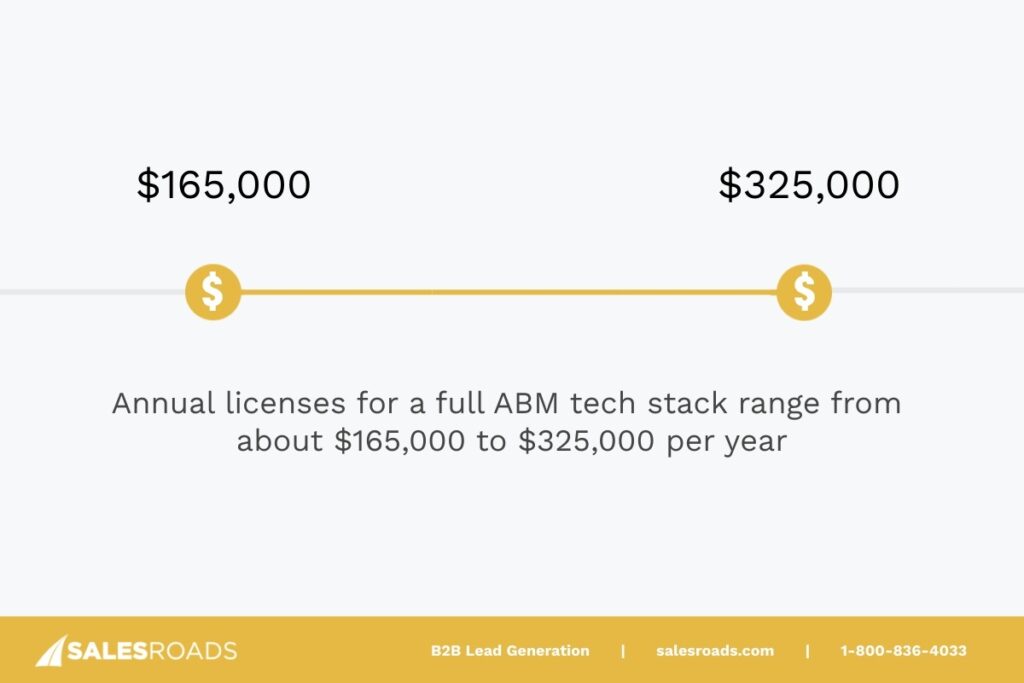
Building internal ABM capabilities is expensive. Entrepreneur’s analysis of ABM technology costs notes that combined annual licenses for a full ABM tech stack — including platforms, intent data, integrations, and related tech — typically range from about $165,000 to $325,000 per year.
Outsourcing makes sense when:
- You need ABM results faster than you can build internal expertise
- Your team lacks bandwidth to execute multi-channel campaigns
- You want access to an established sales tech stack without a massive upfront investment
- You’re testing ABM before committing to a full in-house program
When Keeping ABM In-House Works Better
Outsourcing isn’t always the right call. Consider keeping ABM internal if:
- Your sales cycles require deep institutional knowledge that’s hard to transfer
- You already have ABM expertise on staff
- Your target account list is small enough (under 50 accounts) for personalized internal management
- Budget constraints make agency fees prohibitive
The Essential Checklist for Evaluating ABM Outsourcing Partners
Use this checklist when evaluating potential partners. Each item addresses a critical capability or alignment factor.
1. Proven Track Record with Similar Companies
What to verify:
- Case studies from companies in your industry or adjacent verticals
- Experience with your company size and sales cycle length
- Specific metrics achieved (pipeline generated, deal velocity improvements, conversion rates)
- Client references you can actually call
Why it matters: ABM for a $50M ARR SaaS company selling to enterprise IT differs dramatically from ABM for a manufacturing company targeting procurement teams. Generic “ABM experience” isn’t enough.
Ask this question: “Can you share three case studies from companies with similar deal sizes, sales cycles, and target audiences to ours?”
2. Clear Methodology and Process Documentation
What to look for:
- A defined framework for account selection and tiering
- Documented processes for research, content creation, and campaign execution
- Clear handoff procedures between their team and yours
- Established measurement and reporting cadences
Why it matters: Companies with documented ABM processes are more likely to report success than those operating ad hoc.
Ask this question: “Walk me through exactly what happens in weeks 1-4, 5-8, and beyond. What do we need to provide, and what do you handle independently?”
3. Technology Stack Transparency
What to verify:
- Which platforms they use (intent data, advertising, personalization, analytics)
- Whether you’ll have direct access to platforms and data
- How technology costs are structured (included vs. pass-through)
- Data portability if you end the engagement
Why it matters: Some partners mark up technology costs significantly. Others lock you into their proprietary systems, making transitions painful.
Common ABM tech components to ask about:
| Category | Examples | Questions to Ask |
| Intent Data | Bombora, G2, TrustRadius | Will we own the intent data collected? |
| Personalization | Mutiny, Intellimize | Will personalization persist if we leave? |
| Advertising | LinkedIn, Demandbase, Terminus | Can we see campaign-level performance? |
| Analytics | Salesforce, HubSpot integrations | How does attribution connect to our CRM? |
4. Integration Capabilities with Your Existing Systems
What to verify:
- Experience with your CRM tool (Salesforce, HubSpot, etc.)
- Ability to integrate with your marketing automation platform
- Process for syncing with your sales team‘s workflows
- Data hygiene and enrichment practices
Why it matters: ABM only works when marketing and sales share a unified view of target accounts. A partner who can’t integrate with your systems creates silos instead of eliminating them.
5. Sales Alignment Approach
What to look for:
- Defined processes for involving sales in account selection
- Regular sales-marketing alignment meetings
- Clear SLAs for lead handoffs and follow-up
- Feedback loops to improve targeting and messaging
Why it matters: 77% of B2B buyers rate their purchase experience as extremely complex. ABM only cuts through this complexity when sales and marketing move together.

Ask this question: “How do you structure collaboration with our sales team? What’s the typical time investment required from our sales reps?”
6. Content Creation Capabilities
What to verify:
- In-house content team vs. subcontracted writers
- Process for capturing your brand voice and subject matter expertise
- Portfolio of account-specific and industry-specific content
- Turnaround times for custom content requests
Why it matters: Generic content kills ABM effectiveness. Your partner needs to create materials that resonate with specific accounts and buying committees.
7. Reporting and Attribution Model
What to look for:
- Multi-touch attribution capabilities
- Account-level engagement scoring
- Clear connection between activities and pipeline
- Regular reporting cadence with actionable insights
Why it matters: You need to understand what’s working and what isn’t. Vanity metrics like impressions don’t help you make decisions. Pipeline influence does.
Red Flags That Signal Trouble Ahead
Experience teaches hard lessons. Here are the warning signs that predict partner problems.
Guaranteed Results Without Understanding Your Business
Be skeptical when a partner promises specific pipeline numbers before understanding your:
- Current conversion rates
- Average deal size
- Sales cycle length
- Historical marketing performance
Why it’s dangerous: Legitimate partners know that results depend on factors beyond their control—your sales team’s follow-up, your product-market fit, your pricing. Guarantees without context signal either inexperience or desperation.
One-Size-Fits-All Packages
Watch out for partners who:
- Offer identical packages regardless of your situation
- Can’t explain how they’d customize their approach for your business
- Push you toward their “standard” program without diagnosing your needs
Why it’s dangerous: ABM requires customization by definition. A partner treating it as a commodity service doesn’t understand ABM.
Focused on Early Wins, Not Scaling ABM
Some partners can generate short-term engagement or pipeline from a small set of accounts—but struggle when the program needs to scale.
Why it’s dangerous: Early ABM success doesn’t automatically translate into long-term results. Scaling ABM requires repeatable processes, durable account segmentation, tight sales alignment, and systems that hold up as account volume, regions, and teams expand. A partner who can’t articulate how their approach evolves as you scale may limit your growth instead of accelerating it.
Reluctance to Share References
If a partner:
- Only offers written testimonials (not live references)
- Provides references that are suspiciously hard to schedule
- Gets defensive when you ask for contacts at past clients
Why it’s dangerous: Happy clients talk. Unhappy clients don’t. A partner who can’t produce references either has unhappy clients or hasn’t been in business long enough to develop relationships.
Vague Attribution Claims
Be wary when a partner:
- Claims credit for deals they minimally influenced
- Uses metrics like “accounts engaged” without defining engagement
- Can’t explain how they attribute pipeline to specific activities
Why it’s dangerous: ABM attribution is genuinely hard. But a competent partner should articulate their methodology clearly, acknowledging limitations while providing useful visibility.
No Interest in Your Sales Process
If during evaluation, a partner:
- Never asks about your sales team’s workflow
- Doesn’t inquire about your CRM and how opportunities are tracked
- Shows no curiosity about your sales cycle or buying committee
Why it’s dangerous: ABM exists to support sales. A partner who ignores sales is building campaigns in a vacuum.
Heavy Reliance on Paid Media Without a Strategic Foundation
Watch for partners who:
- Lead with advertising tactics before strategy
- Can’t articulate an account selection methodology
- Treat ABM as “targeted advertising” rather than orchestrated engagement
Why it’s dangerous: Display ads to target accounts isn’t ABM. It’s just targeted advertising. ABM is treating individual accounts as markets of one. That requires strategy first, tactics second.
Opaque Pricing Models and Hidden Fees
Be cautious when pricing:
- Doesn’t clearly break down what’s included
- Includes vague line items like “platform fees” without specifics
- Changes significantly between proposal and contract
Why it’s dangerous: Unclear pricing often means you’ll face unexpected costs mid-engagement. Get everything documented before signing.
The Evaluation Framework: Scoring Potential Partners
Use this framework to compare partners objectively:
| Criteria | Weight | Partner A | Partner B | Partner C |
| Relevant experience | 20% | |||
| Methodology clarity | 15% | |||
| Technology stack | 15% | |||
| Sales alignment approach | 15% | |||
| Reference quality | 15% | |||
| Cultural fit | 10% | |||
| Pricing transparency | 10% |
Score each partner 1-5 on each criterion. Multiply by weight. Compare totals.
This structured approach prevents emotional decision-making and ensures you’re evaluating partners against your actual priorities.
Bottom Line
Choosing the right ABM outsourcing partner isn’t just about finding someone to run campaigns. It’s about finding a strategic partner who understands your business, aligns with your sales team, and delivers measurable pipeline impact.
Use the checklist to evaluate capabilities. Watch for red flags that predict problems. Ask hard questions early.
Take your time. Do the due diligence. Your pipeline depends on it.