Relying on a single point of contact is one of the riskiest moves you can make. When your champion changes roles, goes on leave, or simply loses internal influence, your entire deal can collapse overnight.
This is where a multi-threading strategy becomes essential. By building relationships with multiple stakeholders across the buying committee, you create resilience, accelerate deal velocity, and dramatically improve your win rates.
Why Multi-Threading Is Now a Sales Imperative
The days of single-threaded sales are over. Here’s why modern B2B deals demand a more sophisticated approach:
The Growing Complexity of B2B Decisions
The average B2B buying committee now includes ten to eleven decision-makers. Each brings their own priorities, concerns, and evaluation criteria to the table.
This complexity means:
- Longer sales cycles as more stakeholders weigh in
- Higher risk of stalled deals when key contacts become unavailable
- Greater competition for attention across the organization
A multi-threading strategy directly addresses these challenges by distributing your relationship capital across the entire buying committee rather than concentrating it in a single contact.
The Hidden Cost of Single-Threaded Deals
When you rely on one champion, you’re essentially betting your entire deal on one person’s continued employment, engagement, and influence. Consider these sobering statistics:
| Risk Factor | Impact on Deal |
| Champion leaves company | More than 80% of single-threaded deals fail |
| Champion loses budget authority | Deal stalls indefinitely |
| Champion goes on extended leave | Average 3-month delay |
| Internal reorganization | New stakeholders must be won over from scratch |
What the Data Says About Multi-Threaded Deals
Research consistently shows that multi-threaded deals outperform single-threaded ones:
- Deals with three or more engaged contacts close at rates higher than single-threaded deals
- Multi-threaded opportunities see faster sales cycles on average
- Win rates increase proportionally with the number of engaged buying committee members
The math is clear: more meaningful relationships equal better outcomes.
Identifying Key Members of the Buying Committee
Before you can multi-thread effectively, you need to understand who actually influences the purchase decision.
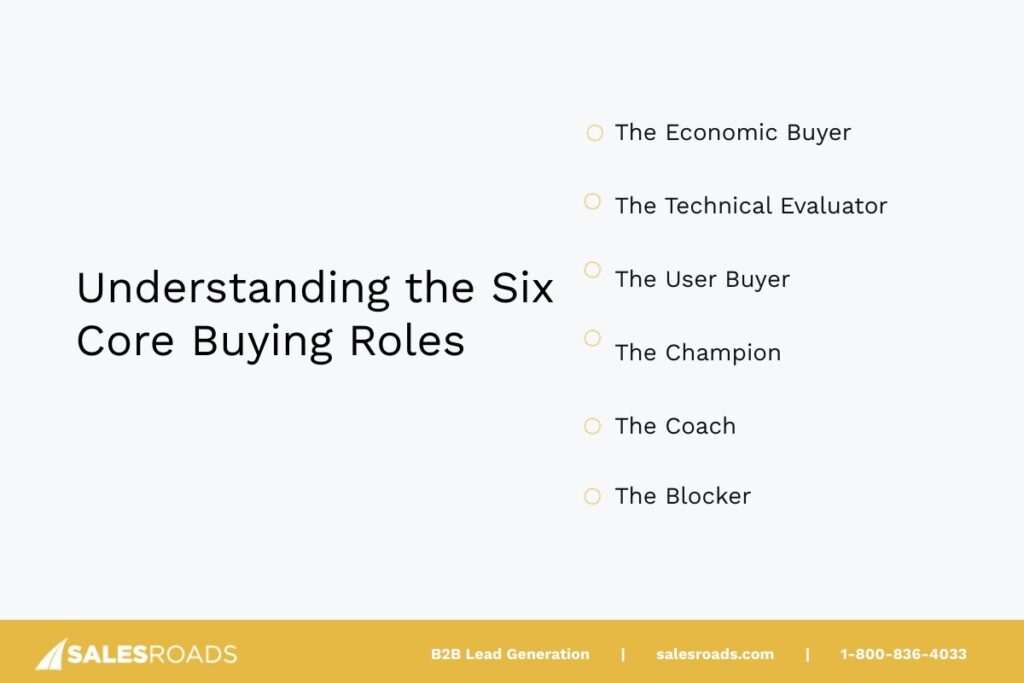
Understanding the Six Core Buying Roles
Most buying committees include some combination of these roles. Keep in mind that one person may fill multiple roles, or a single role may be shared across several people.
He introduced his “POISE” acronym as a complementary framework that helps sellers identify exactly who is missing from their multi-threading efforts:
1. The Economic Buyer
This person controls the budget and has final sign-off authority. They care most about ROI, risk mitigation, and strategic alignment.
How to identify them: Look for C-suite executives, VPs, or department heads with P&L responsibility.
2. The Technical Evaluator
These stakeholders assess whether your solution meets technical requirements and integrates with existing systems.
How to identify them: IT directors, architects, engineers, and technical leads who ask detailed implementation questions.
3. The User Buyer
The people who will actually use your product daily. Their buy-in is crucial for adoption and long-term success.
How to identify them: Team leads, individual contributors, and operational managers in the affected departments.
4. The Champion
Your internal advocate who actively sells on your behalf when you’re not in the room.
How to identify them: They proactively share information, make introductions, and express enthusiasm for your solution.
5. The Coach
An insider who provides candid guidance about internal politics, competing priorities, and decision-making processes.
How to identify them: Often someone you’ve built trust with who offers “off the record” insights.
6. The Blocker
Someone who opposes your solution, whether due to competing priorities, existing vendor relationships, or genuine concerns.
How to identify them: They raise objections, delay meetings, or advocate for alternatives.
Mapping the Buying Committee
Create a visual map of the buying committee for every significant opportunity. Include:
- Name and title of each stakeholder
- Their role in the decision (using the framework above)
- Their disposition toward your solution (champion, neutral, skeptic, blocker)
- Your current relationship strength (strong, developing, weak, none)
- Their key priorities and concerns
This map becomes your strategic guide for multi-threading efforts. Update it regularly as you gather new intelligence.
Finding the Hidden Influencers
Not everyone on the buying committee has an obvious title. Watch for these often-overlooked influencers:
- Executive assistants who control calendar access and meeting logistics
- Project managers who coordinate evaluation processes
- Legal and procurement teams who can accelerate or stall contracts
- Previous vendor users whose past experiences shape current opinions
- External consultants advising on the purchase decision
Your multi-threading strategy should account for these hidden players who can make or break your deal.
He discussed that these Sherpas (consultants) act as guides who can open doors and tell you who you should be talking to within a target account, acting as a vital thread in your multi-threading strategy:
Tailoring Communication Across Stakeholders
One-size-fits-all messaging fails in multi-threaded sales. Each buying committee member needs communication that resonates with their specific role and concerns.
For Economic Buyers:
- Lead with business outcomes and ROI metrics
- Connect your solution to strategic initiatives they’ve publicly discussed
- Quantify risk reduction and competitive advantage
- Keep communications concise and executive-ready
For Technical Evaluators:
- Provide detailed specifications and architecture documentation
- Offer proof-of-concept opportunities and sandbox environments
- Address integration concerns proactively
- Connect them with your technical resources for peer-to-peer conversations
For User Buyers:
- Focus on day-to-day workflow improvements
- Show how your solution reduces friction and saves time
- Offer hands-on demos that simulate real use cases
- Gather and address their specific pain points
For Champions:
- Equip them with internal selling tools (business cases, competitive comparisons, ROI calculators)
- Share success stories they can reference
- Provide visibility into deal progress and next steps
- Express genuine appreciation for their advocacy
Account-Based Marketing as a Multi-Threading Framework
ABM provides the infrastructure and methodology to execute multi-threading at scale. When sales and marketing align around target accounts, multi-threading becomes systematic rather than ad hoc.
Aligning Sales and Marketing for Multi-Threaded Engagement
Effective ABM requires tight coordination between sales and marketing teams. Here’s how they work together:
Marketing’s role:
- Identify and research buying committee members
- Create personalized content for different personas
- Run targeted advertising campaigns to the account
- Track engagement signals across the buying committee
- Nurture contacts who aren’t yet sales-ready
Sales’ role:
- Provide account intelligence back to marketing
- Prioritize high-intent contacts for direct outreach
- Coordinate multi-threaded communication sequences
- Convert marketing-qualified leads into active opportunities
- Share feedback on content effectiveness
Measuring Multi-Threading Success
Track these metrics to evaluate your multi-threading effectiveness:
Account-level metrics:
- Number of engaged contacts per opportunity
- Buying committee coverage (percentage of identified roles with active relationships)
- Account engagement score (aggregate of all stakeholder interactions)
Opportunity-level metrics:
- Correlation between thread count and win rate
- Sales cycle length by number of threads
- Deal size by number of engaged stakeholders
Activity metrics:
- Multi-stakeholder meeting frequency
- Response rates by role and persona
- Content engagement across buying committee members
Use these measurements to refine your strategy and demonstrate the ROI of multi-threading investments.
Common Pitfalls That Undermine Multi-Threading Strategies
Even well-intentioned multi-threading efforts can backfire. Avoid these common mistakes.
Going Around Your Champion
Your champion is your ally. If they sense you’re circumventing them or making them look bad internally, you’ll lose their support entirely.
The fix: Always keep your champion informed about your outreach to other stakeholders. Better yet, ask them to facilitate introductions whenever possible. Frame multi-threading as expanding the coalition of support, not replacing your champion.
Overwhelming the Buying Committee
There’s a fine line between being persistent and being annoying. If every buying committee member receives daily emails from your sales and marketing teams, you’ll create fatigue and resentment.
The fix: Coordinate outreach carefully. Use your CRM to track all touchpoints across the account. Space communications appropriately and ensure each message adds genuine value.
Ignoring the Blockers
It’s tempting to focus all your energy on friendly stakeholders and avoid those who oppose your solution. But unaddressed blockers don’t go away—they work against you behind the scenes.
The fix: Engage blockers directly and respectfully. Seek to understand their concerns. Sometimes a blocker becomes a champion once their objections are genuinely addressed.
Treating All Contacts Equally
Not every stakeholder deserves the same level of attention. Spreading yourself too thin across low-influence contacts means neglecting the decision-makers who truly matter.
The fix: Prioritize ruthlessly based on influence and engagement potential. Focus your deepest multi-threading efforts on contacts who can genuinely move the deal forward.
Losing Track of the Thread
With multiple conversations happening simultaneously, it’s easy to lose track of who said what and what you promised to whom. This leads to awkward moments and eroded trust.
The fix: Maintain meticulous records in your CRM. Document every conversation, commitment, and follow-up item. Review account history before every interaction.
Failing to Connect the Threads
Multi-threading isn’t just about having multiple relationships—it’s about weaving them together into a coherent narrative that moves the buying committee toward consensus.
The fix: Regularly bring stakeholders together (virtually or in person) to align on goals and address concerns collectively. Help them see how your solution serves everyone’s interests.
Bottom Line
The modern buying committee is complex, distributed, and unpredictable. A single-threaded approach leaves you vulnerable to circumstances beyond your control.
A thoughtful multi-threading strategy transforms this complexity from a challenge into an advantage. By building genuine relationships across the buying committee, you create multiple paths to success, accelerate consensus-building, and dramatically improve your chances of winning.